
UGC ad creatives: shooting video ads that sell without a studio
Good UGC ad creatives need neither a studio nor a professional camera: a smartphone, natural light and a clear script are enough for most products sold with cash on delivery. What makes the difference is what you show in the first seconds and how clear the offer is.
This guide covers the format recommendations Meta and TikTok publish, a five-part script, a simple shooting method, and the rules for content from customers or creators (UGC) and for health or beauty products.
What Meta and TikTok recommend
For mobile video, Meta’s video ad guidance suggests trying taller formats (4:5 or 9:16), capturing attention as fast as possible, communicating clearly without sound while getting better with sound on, and considering a message of 15 seconds or less. For Reels ads, Meta recommends 9:16 video with sound and key messages inside the safe zone.
| Point | Meta (Facebook, Instagram) | TikTok |
|---|---|---|
| Format | Vertical 4:5 or 9:16; 9:16 for Reels | Vertical 9:16 |
| Sound | Clear without sound, better with it; sound recommended on Reels | Sound or music recommended |
| Opening | Capture attention as fast as possible | Hook in the first 6 seconds, proposition in the first 3 |
| Length | Consider 15 seconds or less | Not specified on the page cited |
| On-screen text | Key messages inside the safe zone | Content visible inside the UI safe zone |
| Quality | Not specified on the page cited | At least 720p |
A five-part script for UGC ad creatives
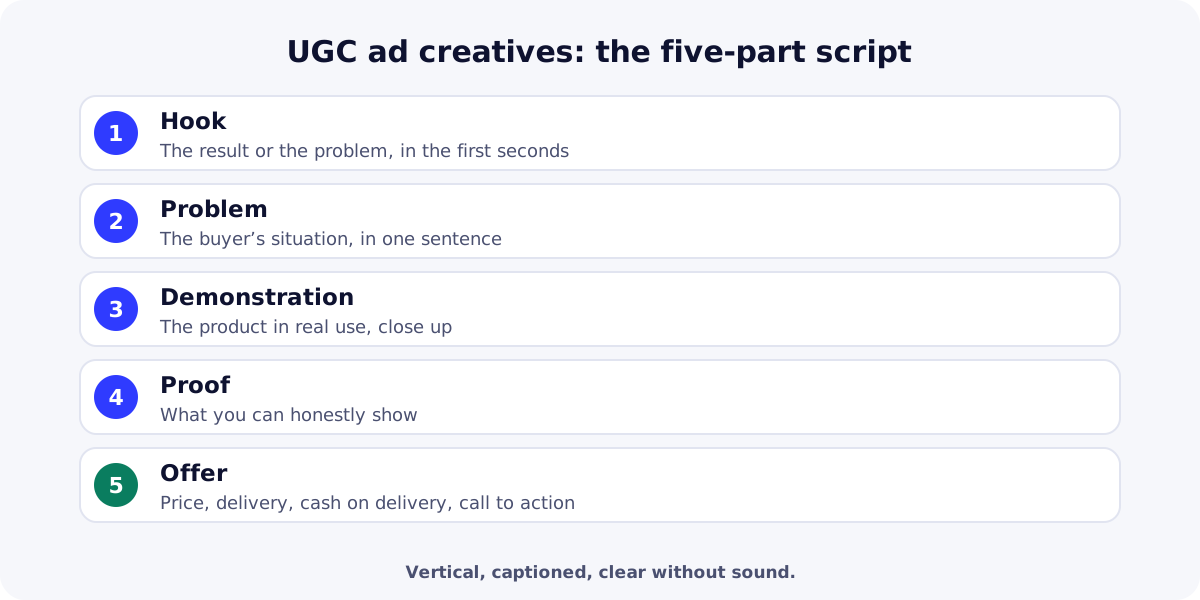
- Hook (first seconds): the product’s visible result, or the problem on screen. No logo, no intro.
- Problem: the buyer’s situation, in one sentence.
- Demonstration: the product in real use, close up, no tricks.
- Proof: what you can honestly show (build detail, what’s in the box, real use by a customer who agreed to be filmed).
- Offer and call to action: price, any bundle, delivery and cash on delivery, then “Order on the page”.
Write several hooks for the same video: that’s often what changes results most, and it gives you genuinely different creatives to test (see our guide to Facebook ads product testing). To find angles, study active ads in the Facebook Ad Library and trending products on TikTok.
Shooting without a studio
- Smartphone on a tripod or stand, clean lens, vertical.
- Natural light facing a window; avoid backlight.
- Sound: a basic lavalier mic improves voice a lot; cut background noise.
- Short shots: product close-ups, hands in action, reactions; vary angles.
- Captions that are readable and placed outside the areas covered by the interface.
- Several versions: same footage, different hooks and orders.
UGC: customers, creators and the rules
UGC (video shot by a customer or creator) looks more natural, but you’re responsible for it:
- Written consent from the person filmed for advertising use, with duration and countries.
- No fake reviews: don’t have an actor play a “happy customer” and don’t invent testimonials.
- Partnerships: under Meta’s Advertising Standards, branded content must tag the featured business partner, and branded content integrations must use the branded content tool.
| Need | Free option | Paid option |
|---|---|---|
| Editing on phone or computer | CapCut (free version)Editing, auto captions, vertical formats. | Adobe Premiere ProProfessional editing software, subscription. |
| On-screen text and thumbnails | Canva (free version)Vertical templates and a simple video editor. | Canva ProLarger library and brand kit, subscription. |
Key takeaways
Effective UGC ad creatives take few resources: vertical, an immediate hook, a real demonstration, a clear offer with cash on delivery, captions. Shoot several hooks, follow Meta’s rules on UGC and health, and track each creative down to the delivered order. Create your ReadyStore store to link every video to its sales.
Sources
- Meta — Video ad tips for mobile (accessed 18 October 2026)
- Meta — Facebook and Instagram Reels ads (accessed 18 October 2026)
- TikTok Ads — Creative best practices (accessed 18 October 2026)
- Meta — Advertising Standards (accessed 18 October 2026)
- Meta — Health and Wellness policy (accessed 18 October 2026)
Frequently asked questions
What format should a Facebook video ad use?
Meta recommends vertical formats, 4:5 or 9:16, and 9:16 for Reels. On a phone held upright, these formats fill more of the screen than horizontal video.
How long should a video ad be?
Meta suggests considering a message of 15 seconds or less on mobile. What matters is that the hook and offer come fast: a longer video can work if every second shows something useful.
Do I need a professional camera?
No. A recent smartphone shoots at sufficient quality (TikTok recommends at least 720p). Light, sound and a clear demonstration matter more than the device.
Can I use customer videos?
Yes, with their written consent for advertising use, duration and countries. Never invent testimonials or have someone play a fake customer: it misleads buyers and breaks advertising rules.
Are before-and-after videos allowed?
Meta’s Health and Wellness policy restricts before-and-after images of cosmetic products and procedures, and covers weight-loss ads. Reread the policy for your product before shooting, and avoid promising results.
Related guides
Facebook ads product testing: a campaign structure for COD
Facebook ads product testing for COD stores: objective, ad sets, creatives, the learning phase and deciding on cost per delivered order, not cost per purchase.
Read the guideProduct researchFacebook Ad Library tutorial: spot products that sell
A Facebook Ad Library tutorial to spot products that sell: country search, which signals to read, the tool’s limits and a simple tracking method for COD sellers.
Read the guideProduct researchTikTok trending products: how to spot them early
Spot TikTok trending products with the Creative Center, TikTok search and Google Trends, then check margin, import lead times and rules before you test.
Read the guideStore for Facebook Ads
A store and tracking built for Meta campaigns: Pixel per product, CAPI, attribution and abandoned orders.
Learn more
You launch the store and the ads. The center does the rest.
Create your ReadyStore store: a short COD form, Meta Pixel and Conversions API, orders and analytics in one place.