
COD dropshipping startup cost: how much do you need?
Your COD dropshipping startup cost is easy to underestimate for one simple reason: with cash on delivery, you spend before you collect. Stock, freight and ads are paid up front, while customers’ money only arrives after delivery, and then after the service center remits it.
This guide breaks down the three envelopes to plan for (before the first sale, during the test, safety reserve), gives a worked example using a real center’s public rates, and sets out a method to size your own budget from your prices and target cost per order.
Why COD dropshipping startup cost is really about cash flow
In the model described in our guide on how to start a COD ecommerce business without inventory, you don’t buy a warehouse or a van. But you fund three things before getting paid: the first product batch, freight to the center, and the ads that generate orders.
Money then comes back in stages: the customer pays on delivery, the center collects, then remits on its schedule. GibShip’s terms and conditions, for example, provide for weekly remittance. Several weeks can pass between your first spend and your first payout, and that gap is what you need to finance.
The three envelopes of a startup budget
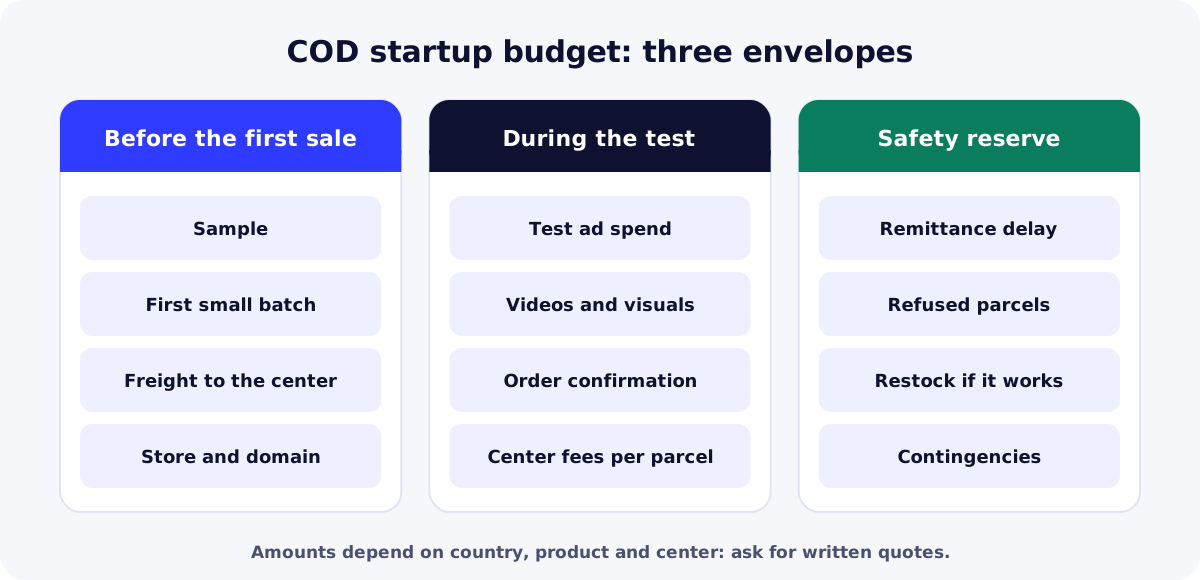
1. Before the first sale
- A sample to check quality, photos and how the product works.
- A first small batch: enough to test without tying up too much cash, within the supplier’s minimum order quantity.
- Freight to the center: air (fast, billed by weight) or sea (slow, billed by volume), plus any customs clearance fees.
- Store and domain: the cost of the platform and domain name, depending on the plans you choose.
2. During the test
- Test ad spend: the most variable line, sized from your target cost per order (see below).
- Creatives: videos and visuals, made yourself with free tools or handed to creators.
- Confirmation: often included in the center’s fee, otherwise budget time or a provider.
- Center fees per parcel: paid up front or deducted from remittances, depending on the contract.
3. The safety reserve
The reserve covers what nobody sees at the start: ads that keep running while you wait for the first payout, refused parcels, a quick restock if the product works, and surprises (customs fees, rate changes).
Worked example in Mauritania
Example for a light product (250 g) sold in Nouakchott. Freight, delivery and storage rates are those GibShip shows on its pricing page in October 2026 (indicative, confirmed by quote). Purchase price, cost per order and rates are assumptions to replace with your own.
| Line | Calculation | Amount |
|---|---|---|
| First batch | 100 units × $3 (assumption) | $300 |
| Air freight China → Mauritania | 100 × 0.25 kg = 25 kg × $15/kg | $375 |
| Storage | Free for the first month per GibShip’s rate card | $0 |
| Test ad spend | 15 days × $12 (assumption: 60 orders at $3) | $180 |
| Center fees | 33 delivered parcels (55% of 60) × $6 | $198 |
| Reserve: ads while waiting for remittance | 15 days × $12 | $180 |
| Contingency | 10% of the $1,233 subtotal | ≈ $123 |
| Total to plan for | 1,233 + 123 | ≈ $1,356 |
Two lessons. First, air freight costs more than the products themselves here: weight is a product-selection criterion, not a detail. Second, part of the budget comes back fast (the 33 delivered orders bring in revenue), but only after delivery and remittance, so you need to be able to front it.
Sea freight is much cheaper by volume ($200/m³ on the same rate card) but takes 45 to 60 days. A common approach is to test with a small batch by air, then restock by sea once the product is validated.
Sizing your test ad budget
Rather than picking an amount at random, start from your margin. The test budget works like this:
- Set a maximum cost per order: the point beyond which the offer stops being profitable once confirmation and delivery rates are factored in (see our COD profit calculation).
- Choose how many orders you need to judge: enough for confirmation and delivery rates to be readable, say a few dozen.
- Multiply: test budget ≈ target cost per order × number of orders.
- Spread it over time: Meta enforces minimum budgets that vary by currency and objective; Ads Manager tells you, and Meta explains them in its minimum budget recommendations.
Cutting the budget without weakening the test
- Pick a light, compact product: air freight is billed by the kilo.
- Order a modest first batch and negotiate the minimum quantity with the supplier or through the center.
- Make the first videos yourself with free tools.
- Let the center handle confirmation if it’s included in its fee, instead of spending your days on it.
- Raise the average order value with bundles and an add-on product, to absorb ad costs better.
| Need | Free option | Paid option |
|---|---|---|
| Track budget and spending | Google SheetsOnline spreadsheet, usable with a Google account. | Microsoft Excel (Microsoft 365)Spreadsheet included in Microsoft 365 subscriptions. |
| Make test videos | CapCutOnline video editor, free to use with no credit card. | Canva ProPaid plan with extra templates, assets and tools. |
| Confirm orders | WhatsApp BusinessApp for small businesses: messaging and catalog. | The center’s call centerPhone confirmation included in GibShip’s fee. |
Key takeaways
A realistic COD dropshipping startup cost covers a first batch and its freight, a test ad budget sized from your maximum cost per order, and a reserve to bridge the wait for remittance. Get written quotes, pick a light product and set stop rules before spending. To choose the center that sets part of these costs, see our guide to choosing a COD fulfillment center. Create your ReadyStore store to track orders and profitability in one place.
Sources
- GibShip — Pricing (accessed 18 October 2026)
- GibShip — Terms and conditions (updated July 22, 2026) (accessed 18 October 2026)
- Meta — Minimum budget recommendations (accessed 18 October 2026)
Frequently asked questions
Can you start COD dropshipping with no money?
No. Even without a warehouse or team, you need to fund a first batch, its freight and ads before getting paid, because the customer pays on delivery and the center remits afterwards. The model lowers the upfront investment; it doesn’t remove it.
How much ad budget do I need to test a product?
Size it from your maximum cost per order multiplied by the number of orders you need to judge the product, for example a few dozen. Also respect Meta’s minimum budgets, which depend on currency and objective, and set your stop rules before launching.
Do I have to pay the center’s fees up front?
It depends on the contract: some centers bill per-parcel fees separately, others deduct them from collected cash before remitting. International freight and product purchases are generally paid before shipping. Ask for payment terms in writing.
Air or sea freight for the first batch?
For a test, air lets you launch fast but is expensive by weight: on GibShip’s October 2026 rate card, $15/kg to Mauritania in 2 to 3 weeks, versus $200/m³ in 45 to 60 days by sea. Many sellers test by air, then restock by sea.
How long until I get my budget back?
No timeline is guaranteed: it depends on the product, ad cost, confirmation and delivery rates, and the center’s remittance schedule. Some tests never become profitable. Track cost per delivered order every week so you can decide quickly.
Related guides
How to start a COD ecommerce business without inventory
How to start a COD ecommerce business without inventory or staff: you run the store and ads, a service center handles sourcing, delivery and cash collection.
Read the guideGetting startedCOD fulfillment center: what it does and how to choose one
What a COD fulfillment center does (stock, confirmation, delivery, cash collection) and 7 criteria to choose one: fees, lead times, remittance and statements.
Read the guideAnalytics and profitability
Order statistics, expenses and a COD profitability calculator to steer your margin.
Learn more
You launch the store and the ads. The center does the rest.
Create your ReadyStore store: a short COD form, Meta Pixel and Conversions API, orders and analytics in one place.