
COD remittance: how to check the cash collected for you
COD remittance is when an order finally becomes money in your account. Between the customer paying the courier and the transfer you receive, there are several intermediaries, deducted fees and sometimes holdbacks: that’s where most discrepancies hide.
This guide describes how the cash flows, the clauses to get your service center to put in writing, how to read and check a statement, how the remittance delay affects your cash flow, and the signs that should alert you.
How COD remittance flows
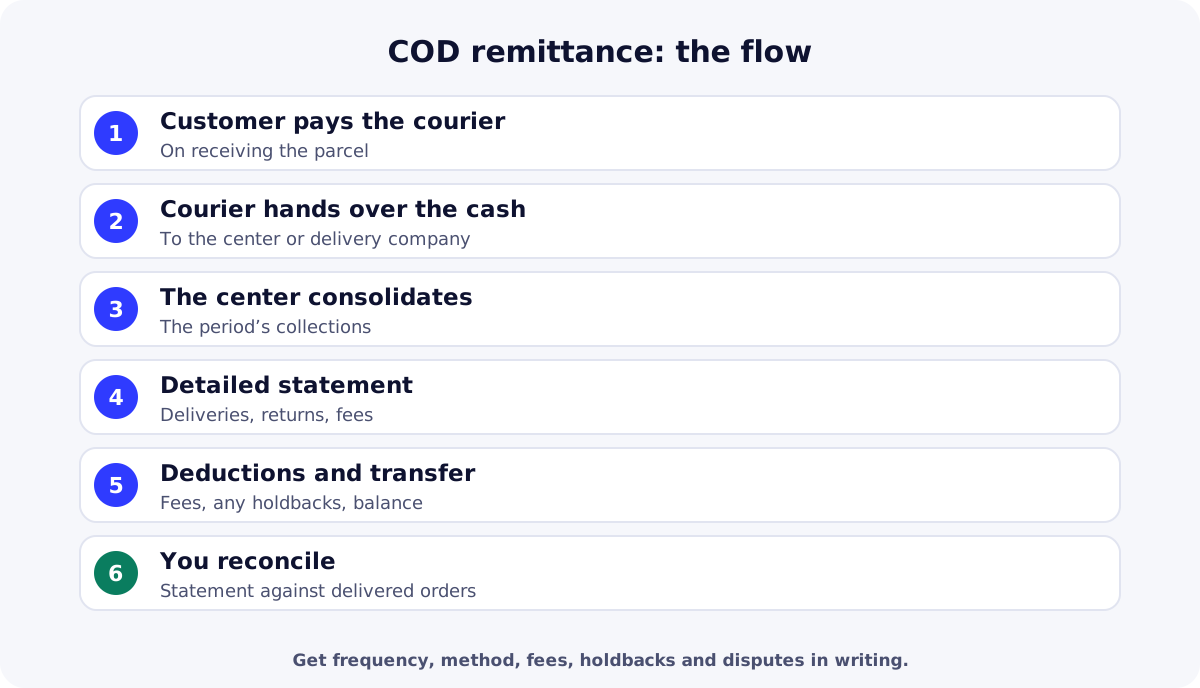
- The customer pays the courier on receiving the parcel.
- The courier hands over the cash to the service center (or delivery company).
- The center consolidates the period’s collections.
- It prepares a statement: deliveries, returns, fees.
- It deducts its fees and any holdbacks, then transfers the balance.
- You reconcile the statement with your delivered orders.
A real example: GibShip’s terms and conditions (updated July 22, 2026) provide for weekly remittance with a detailed statement of deliveries made, returns and applicable fees. They also state that GibShip may temporarily hold back the amounts strictly needed to handle pending returns or reported delivery disputes.
Clauses to get in writing
| Point | Question to ask | Why |
|---|---|---|
| Frequency and day | Weekly, fortnightly? Which day? | Plan your cash flow |
| Payment method | Bank transfer, mobile money, other? Transfer fees? | Know the amount you really receive |
| Currency | In which currency, at what exchange rate? | Avoid hidden FX losses |
| Deducted fees | Delivery, return, refused parcel, storage, other | Recalculate your real margin |
| Holdbacks | Amount, reason, duration, release date | Don’t leave money blocked indefinitely |
| Minimum | A minimum amount before transfer? | Anticipate small volumes |
| Disputes | Deadline and channel to dispute a line | Be able to fix an error |
| Governing law | Which country and courts in a dispute? | Know where to enforce your rights |
Reading and checking a statement
| Line | Amount | What to check |
|---|---|---|
| Collected (40 delivered orders) | 1,600 | Count and amounts = your delivered orders |
| Delivery fees (40 × 7) | −280 | Quoted rate |
| Return fees (12 parcels) | −48 | Number of returns = your statuses |
| Temporary holdback (dispute) | −80 | Written reason and release date |
| Net remitted | 1,192 | Amount received in your account |
The line-by-line reconciliation method is in our guide to the COD delivery rate; criteria for choosing a reliable center are in the guide to choosing a COD fulfillment center.
Remittance delay and cash flow
You pay for stock and ads before you’re remitted. Between ad spend and money in your account, add confirmation time, delivery time, then the wait until the next remittance. With weekly remittance, an order delivered just after a cut-off waits almost another week.
- Estimate your need: one period’s spending × number of periods before the first remittance.
- Keep a reserve for ads and restocking during that delay.
- Don’t raise budget beyond what your cash can front (see our guide on how to scale a COD business).
Warning signs
- Repeatedly late remittances with no written explanation.
- Statements without detail per order, or rounded totals.
- Holdbacks that pile up with no release date.
- New fees that aren’t in the quote.
- Orders delivered on your side but missing from the statement.
When you see these signs: ask for a written explanation, limit the stock you entrust and the new orders you send until things are clear, and get advice if the dispute persists.
| Need | Free option | Paid option |
|---|---|---|
| Reconcile statements and orders | Google SheetsOne tab per statement, one gap column. | Microsoft Excel (Microsoft 365)Spreadsheet included in Microsoft 365 subscriptions. |
| Track cash flow and bookkeeping | Wave (accounting)Online accounting software with a free plan; check availability in your country. | QuickBooksSubscription accounting software. |
Key takeaways
COD remittance can be controlled: a known flow, written clauses (frequency, method, fees, holdbacks, disputes), a statement reconciled weekly, cash planned for the delay, and a quick reaction to warning signs. Create your ReadyStore store to track delivered orders and reconcile them with every statement.
Sources
- GibShip — Terms and conditions (updated July 22, 2026) (accessed 18 October 2026)
- GibShip — Pricing (accessed 18 October 2026)
Frequently asked questions
How does COD remittance work?
The courier collects from the customer and hands the cash to the center or delivery company, which consolidates the period, deducts its fees and any holdbacks, then transfers the balance to you with a detailed statement.
How often do centers remit funds?
It depends on the contract. GibShip, for example, states weekly remittance in its terms. Get the day, payment method and any transfer fees specified.
What is a remittance holdback?
An amount the center keeps temporarily, for example for pending returns or delivery disputes. Always ask for the reason, the amount and the date it will be released.
What if a statement doesn’t match my orders?
List the gaps order by order (delivered but missing, different amount, unexpected fees) and ask for a written explanation within the contract’s deadline. Keep a record of every exchange.
How much cash should I plan for?
Enough to fund stock and ads for the whole delay between spending and the first remittance: confirmation, delivery, then the wait for the remittance. Work it out with your own delays rather than an average.
Related guides
COD delivery rate: the numbers to demand from your center
COD delivery rate and confirmation rate: exact definitions, statements to demand from your center, reconciling them with your orders and diagnosing gaps.
Read the guideGetting startedCOD fulfillment center: what it does and how to choose one
What a COD fulfillment center does (stock, confirmation, delivery, cash collection) and 7 criteria to choose one: fees, lead times, remittance and statements.
Read the guideProfitabilityCost per delivered order: measuring real COD profit each week
Cost per delivered order in COD: every cost to count, a weekly review for each product and a simple grid to decide whether to keep, fix or stop a product.
Read the guideOrder management
Statuses, bulk actions, stock tied to statuses, exports and Google Sheets and logistics integrations.
Learn more
You launch the store and the ads. The center does the rest.
Create your ReadyStore store: a short COD form, Meta Pixel and Conversions API, orders and analytics in one place.